
Exercises · Hip
Pain on the outside of the hip
Pain over the bony point on the outside of the hip, sometimes down the outer thigh, worse lying on that side, climbing stairs, standing on one leg or after sitting cross-legged. It usually comes from irritated tendons of the side-hip muscles (gluteal tendinopathy, often called bursitis). Avoid crossing your legs and start with gentle strengthening.
Where it hurts
- Gluteus medius · both sides
Side of the hip - Tensor fasciae latae · both sides
Outer front of the hip - Iliotibial band · both sides
Outside of the thigh (IT band)
7 exercises, in this order
-
 1
Isometric hip push against a wall
5 reps · 1 set · 30 secStrengthens the side of the hip without squashing the sore tendon, a gentle start for outer hip pain.
How to do it
1. Stand side-on to a wall with the sore hip furthest away.
2. Lift the knee nearest the wall to hip height and press the outside of that knee into the wall (a folded towel helps).
3. Stand tall and keep your pelvis level. You’ll feel the standing hip working.
4. Hold for 30 seconds, rest and repeat. -
 2
Clamshell
12 reps · 3 setsStrengthens the muscles on the side of the hip that steady the pelvis and knee.
How to do it
1. Lie on your side with your hips and knees bent and your feet together.
2. Keeping your feet touching, lift your top knee as far as you can without rolling your hips back.
3. Hold for 2 seconds.
4. Lower slowly and repeat, then switch sides. -
 3
Bridge
10 reps · 3 setsStrengthens the buttocks and back muscles that support the lower back and hips.
How to do it
1. Lie on your back with your knees bent, feet flat and hip-width apart, arms by your sides.
2. Tighten your stomach and squeeze your buttocks.
3. Lift your hips until your body is in a straight line from shoulders to knees. Don’t arch your back.
4. Hold for 3 to 5 seconds, then lower slowly. -
 4
Standing hip abduction
12 reps · 2 setsStrengthens the side of the hip while standing, holding on for balance.
How to do it
1. Stand tall holding the back of a chair or a counter.
2. Keeping your body upright and toes pointing forward, lift one leg out to the side.
3. Lift only as far as you can without leaning.
4. Lower slowly and repeat, then switch sides. -
 5
Sit to stand
10 reps · 3 setsStrengthens the thighs and buttocks for getting up from chairs, toilets and cars.
How to do it
1. Sit near the front of a firm chair with your feet flat and hip-width apart.
2. Lean forward slightly and stand up, using your arms only if you need to.
3. Keep your knees in line with your toes.
4. Slowly sit back down with control. Use a higher chair to make it easier. -
 6
Kneeling hip flexor stretch
3 sets · 30 secStretches the front of the hip, which tightens with long periods of sitting.
How to do it
1. Kneel on your right knee (on a cushion) with your left foot flat in front, both knees at 90°.
2. Tuck your tailbone under and squeeze your right buttock.
3. Gently shift your weight forward until you feel a stretch at the front of the right hip. Keep your back upright.
4. Hold, then switch sides. Hold a chair for balance if needed. -
 7
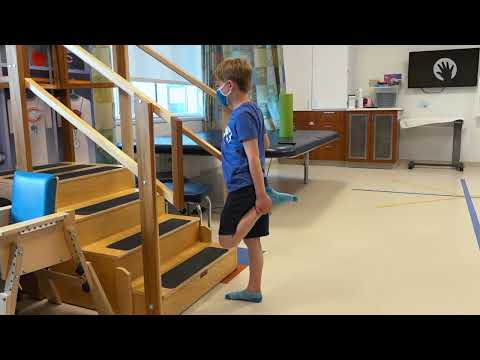
Standing quadriceps stretch
3 sets · 30 secStretches the front of the thigh, which pulls on the kneecap when tight.
How to do it
1. Stand holding a chair or wall for balance.
2. Bend one knee and hold your ankle behind you (use a towel around the ankle if you can’t reach).
3. Keep your knees together and gently tuck your tailbone under until you feel a stretch at the front of the thigh.
4. Hold, then switch sides.
General advice for common aches, not a diagnosis. Move gently and within comfort. Stop if pain gets sharper or spreads, and see a physiotherapist if it hasn’t eased in a week or two.
Anatomy drawing: OpenStax, Tomáš Kebert and umimeto.org, adapted by Flexxo, CC BY-SA 4.0.
